


Views: 0 Author: Site Editor Publish Time: 2026-09-22 Origin: Site


Conveyor carryback is not just a housekeeping issue; it is a primary driver of premature idler failure, belt misalignment, and unscheduled downtime in bulk material handling. Facility managers often attempt to solve severe carryback issues by over-tensioning a single scraper, leading to accelerated belt wear, increased energy consumption, and frequent blade replacements. When wet, sticky, or abrasive materials cling to the return side of the belt, they rapidly degrade structural components and create severe safety hazards. Mitigating fugitive material requires a multi-stage approach rather than a single brute-force fix. This guide breaks down the technical distinctions between a primary and secondary belt cleaner, detailing how to evaluate, specify, and implement a dual-stage system that maximizes belt life and operational uptime.
Distinct Operational Roles: A primary belt cleaner removes 60-70% of bulk carryback at the discharge point, while a secondary belt cleaner targets the remaining 30-40% of sticky fines and dust.
Material and Design Differences: Primary cleaners typically utilize a flexible polyurethane belt scraper to peel heavy material, whereas secondary cleaners often employ rigid tungsten carbide or specialized metal blades for precision scraping.
Synergistic Performance: Relying on a single belt cleaner forces it to perform outside its design parameters; a dual-stage system lowers overall maintenance costs and extends the lifespan of both the belt and the cleaning blades.
Implementation Constraints: Proper selection depends heavily on belt speed, material characteristics, available installation space, reversing belt requirements, and the type of belt splice (vulcanized vs. mechanical).
Establishing baseline metrics for conveyor cleanliness is the first step in evaluating system performance. You cannot improve what you do not measure. Acceptable carryback volume varies by industry, but measuring it requires capturing fugitive material in catch pans over a set operational period. Facility operators must track cleanup labor hours meticulously. Shoveling material from walkways and catwalks drains maintenance resources that should be deployed for preventative tasks. Tracking idler replacement frequency provides a clear indicator of carryback severity. When abrasive fines bypass the head pulley, they inevitably pack into the bearings of return rollers, causing them to seize.
To properly quantify the impact of fugitive material, plant managers should implement the following tracking protocols:
Measure the exact weight of material collected in dribble chutes over a 24-hour operational period.
Log the weekly man-hours dedicated exclusively to shoveling, vacuuming, or washing down the conveyor structure.
Record the specific locations of failed return idlers to identify carryback drop zones.
Monitor the amperage draw of the conveyor drive motor to detect increased friction from seized components.
The cascading effects of fugitive material extend far beyond dirty floors. Material buildup on tail pulleys alters the pulley profile. This uneven surface causes severe belt tracking issues, forcing the belt to wander and rub against the conveyor structure. Edge damage follows quickly, exposing the internal fabric plies to moisture and degradation. Workplace safety also takes a direct hit. Combustible dust accumulation poses severe explosion risks in enclosed spaces like tunnels or galleries. Wet, muddy carryback creates immediate slip and fall hazards for plant personnel. Regulatory bodies actively issue citations for these exact unsafe working conditions.
Relying on one scraper to handle both bulk volume and wet fines mathematically guarantees suboptimal performance. This is known as the single-cleaner fallacy. A single blade cannot physically maintain the aggressive angle needed for fine scraping while absorbing the heavy impact of bulk material. Operators compensate by cranking up the tension. This forces the blade hard against the belt cover, accelerating wear on both surfaces. Long-term operational expenditure rises sharply as belts require premature replacement and motors draw more amperage to overcome the induced friction.
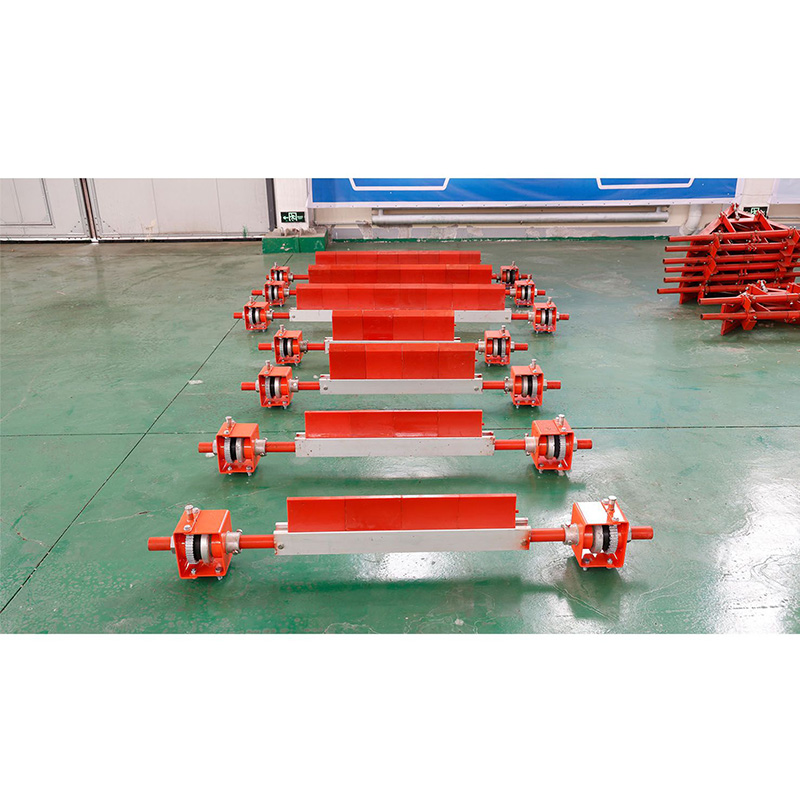
A primary cleaner sits directly on the face of the head pulley. Installers position it just below the material trajectory, typically between the 3 o'clock and 4 o'clock positions on the pulley face. This location is highly strategic. It allows the scraped material to fall naturally into the main discharge chute alongside the primary material flow. Mounting the cleaner too high interferes with the material trajectory, causing premature wear on the blade tip. Mounting it too low allows material to bypass the chute entirely, defeating the purpose of the installation.
The core function of this unit is bulk removal. It is designed to shear off the heavy, coarse top layer of material before it passes the vertical center of the head pulley. Think of it as a roughing tool. It does not leave a perfectly clean surface. Instead, it removes the heavy volume that would otherwise overwhelm downstream components. By knocking down 60% to 70% of the material, it clears the path for precision cleaning later in the sequence. This bulk removal is essential for handling materials like run-of-mine coal, heavy metal ores, and aggregate.
Blade composition heavily favors elastomeric materials. The system predominantly utilizes a polyurethane belt scraper to achieve the right balance of rigidity and flex. Polyurethane offers the necessary flexibility to absorb impact from heavy material and belt anomalies without damaging the belt cover. Manufacturers often color-code these blades to indicate specific formulations. High-temperature urethanes resist melting in cement plants handling hot clinker. Chemical-resistant durometers handle acidic fertilizers. High-abrasion formulations withstand the punishment of crushed granite or iron ore.
Tensioning mechanisms for these primary units focus on shock absorption. They typically rely on linear or radial tensioners designed to maintain consistent, forgiving contact pressure against the curved surface of the pulley. Radial tensioners use a twisting motion to keep the blade engaged as the urethane wears down. Linear tensioners push the blade straight up into the pulley. Both designs feature built-in relief mechanisms. If a heavy mechanical splice hits the blade, the tensioner allows the blade to deflect momentarily, preventing catastrophic damage to the belt and the cleaner mainframe.
Installation location shifts entirely for the second stage. This unit is installed immediately past the point where the belt leaves the head pulley. It operates on the flat, unsupported return side of the belt. In some high-tension applications, installers place it against a hold-down roller to provide a stable scraping surface. Operating on a flat surface allows the blade to maintain a strict, uniform contact line across the entire width of the belt, which is required for removing microscopic particles.
Its core function acts as a precision squeegee. It exists to remove the thin layer of sticky fines, moisture, and dust that bypassed the primary stage. While the volume of material is low, its consistency is often problematic. Wet clay, synthetic gypsum, and fine coal dust adhere stubbornly to the rubber cover. The secondary belt cleaner applies targeted pressure to break this suction and drop the remaining fines into a secondary catch chute or dribble pan.
Blade composition shifts from thick urethane to hard metals. The system frequently utilizes tungsten carbide, stainless steel, or hardened alloy blades for high-efficiency scraping. Tungsten carbide offers exceptional wear resistance against abrasive fines, maintaining a sharp scraping edge for months of continuous operation. However, specialized polyurethane is used in certain chemical or food-grade applications where metal blades pose a contamination risk or where the belt cover is too soft to withstand metal contact.
Unlike standard primary cleaners, secondary units can be specifically engineered for reversing belts. Belts that run in both directions will instantly destroy a standard, forward-facing metal blade. Reversing cleaners accommodate this by using trailing-edge or dual-directional blades. These blades flip or pivot depending on the direction of belt travel, ensuring safe scraping without catching and ripping the belt cover when the conveyor runs in reverse.
Tensioning requires high responsiveness. The mechanism must provide independent tensioning across the width of the belt. Systems often use spring-loaded, pneumatic, or twisted rubber cushions. This allows individual blade segments to rise and fall with the natural undulations of the belt. It maintains strict, flat contact with the belt surface without generating excessive friction that could overheat the rubber or cause the blade to chatter violently against the belt.
The angle of attack defines how each blade interacts with the rubber cover. A primary belt cleaner uses a peeling angle against a curved surface. The blade sits at a negative angle relative to the pulley, allowing bulk material to slide down its face without wedging between the blade and the belt. Secondary cleaners use a scraping angle against a flat surface. The metal blades sit vertically or slightly angled against the direction of travel, creating a sharp squeegee effect that shears off microscopic particles and moisture.
Material volume handling dictates the physical size of the components. Primary units handle high volume and large particle sizes. Their heavy-duty steel mainframes and thick urethane blades resist massive impact forces from rocks and heavy ore. Secondary units handle low volume but deal with microscopic particle size and moisture. Their frames are often lighter, but their blade tips are engineered for extreme precision and hardness to scrape away the sticky film left behind.
Wear rates and replacement cycles differ drastically based on the operating environment. A thick urethane blade degrades steadily under heavy load. Operators can visually track this wear and schedule replacements predictably. A tungsten carbide blade experiences abrasive wear at a much slower rate. However, carbide is brittle. While it lasts longer against fine abrasion, a single impact from a damaged belt splice or a large piece of tramp metal can shatter the carbide tip instantly, requiring immediate replacement.
Splice compatibility requires careful evaluation before installation. Vulcanized splices create a seamless, smooth belt surface. Both primary and secondary cleaners glide over vulcanized splices without issue. Mechanical fasteners present a severe hazard. Unskived mechanical splices protrude above the belt cover. A rigid secondary metal blade will catch these fasteners, ripping them out of the belt. If mechanical splices are present, operators must use skived splices (recessed into the belt) or select secondary cleaners with specialized, impact-absorbing urethane mounts.
Feature | Primary Cleaner | Secondary Cleaner |
|---|---|---|
Installation Location | Face of the head pulley (3 to 4 o'clock) | Flat return side, just past the head pulley |
Target Material | Bulk volume, heavy rocks, large debris | Sticky fines, dust, moisture film |
Blade Material | Thick polyurethane (various durometers) | Tungsten carbide, hardened steel, specialty urethane |
Angle of Attack | Negative peeling angle | Vertical or positive scraping angle |
Splice Compatibility | Handles mechanical and vulcanized splices well | Requires vulcanized or skived mechanical splices |
Combining a primary and secondary unit achieves the industry standard for carryback reduction. This 90%+ efficiency benchmark is rarely attainable with a single blade. The primary knocks down the heavy debris, protecting the secondary blade from impact damage. The secondary blade then operates in a low-impact environment, allowing it to focus entirely on precision scraping. This symbiotic relationship maximizes the effectiveness of both components and ensures the return belt remains clean as it travels back to the tail pulley.
Balancing the upfront capital expenditure of a two-cleaner system is straightforward when viewed against operational savings. The initial hardware costs more to purchase and install. However, the reduction in manual cleanup labor pays for the equipment rapidly. Extending the life of return idlers, tail pulleys, and the conveyor belt itself provides a massive return on investment. Replacing a single torn belt or a seized tail pulley costs exponentially more than installing a proper belt cleaner system.
Energy consumption trade-offs often confuse facility managers during the specification process. A common misconception suggests that two cleaners create excessive drag on the drive motor, increasing electrical costs. In reality, proper tensioning minimizes this drag. More importantly, the drag caused by two clean blades is significantly less than the drag caused by dozens of return idlers packed with fugitive material. A clean belt requires less amperage to move than a dirty, misaligned belt grinding against seized rollers and buried structural steel.
Handling extreme environments sometimes means a dual-stage system is insufficient. Moving highly cohesive materials like wet clay, or meeting stringent food-grade sanitation requirements, necessitates tertiary systems. Tertiary cleaners, wash boxes, or motorized brush cleaners add a third layer of defense. These systems use water sprays and secondary squeegees to achieve near-perfect cleanliness. They require complex water management and drainage infrastructure, but they represent the ultimate solution for zero-tolerance carryback applications.
Space constraints in legacy conveyor structures pose a significant implementation risk. Older chutes were rarely designed with modern, multi-stage cleaning systems in mind. Mitigating the risk of inadequate installation space requires evaluating compact or modular cleaner designs. Some manufacturers offer low-profile secondary cleaners specifically engineered to fit into tight clearances between the head pulley and the first return idler. Field measurements must be exact to ensure the cleaner mainframe does not interfere with the chute walls or the belt itself.
Improper tensioning hazards destroy equipment daily across industrial sites. Under-tensioning causes blade chatter. The blade bounces against the belt, leaving horizontal stripes of carryback and accelerating wear on the tensioner springs. Over-tensioning creates severe friction. It leads to premature blade wear, belt cover gouging, and excessive heat generation that can degrade the rubber. Operators must follow exact manufacturer specifications for tensioning, utilizing built-in spring gauges rather than relying on guesswork or physical feel.
Designing the installation for safe, rapid blade changeouts is a maintenance reality that dictates long-term success. Technicians will not service equipment that is dangerous or difficult to reach. Installations should allow blade removal from the side of the conveyor without requiring confined space entry or extensive scaffolding. Utilizing built-in wear lines on polyurethane blades provides visual indicators for maintenance crews, allowing them to schedule replacements during planned outages before the blade fails completely.
Adjusting cleaner selection for material-specific challenges prevents rapid failure. Different bulk materials require entirely different scraping strategies:
Highly Abrasive Materials (Iron Ore, Crushed Glass): Require high-durometer urethane and heavy-duty carbide tips to withstand constant grinding.
Highly Cohesive Materials (Wet Clay, Synthetic Gypsum): Require non-stick blade profiles and aggressive scraping angles to prevent material from building up on the blade itself, a condition known as ice-berging.
High-Temperature Materials (Clinker, Foundry Sand): Require specialized heat-resistant urethane that will not melt or deform under continuous thermal exposure.
Clarifying tail pulley protection is essential for complete system design. Head pulley cleaners do not protect the tail pulley from fugitive material that falls onto the return run from the environment. Wind, spillage, and structural vibration can drop material onto the inside of the return belt long after it passes the head pulley. V-plows or diagonal plows must be implemented in tandem with head pulley cleaners. These plows sit just before the tail pulley, sweeping stray rocks and debris off the belt before they can get crushed between the belt and the pulley face.
Take the following steps to upgrade your conveyor cleaning system:
Conduct a physical audit of the return belt to measure current carryback volume and identify specific drop zones.
Inspect existing head pulley clearance to determine the exact dimensions available for mounting new hardware.
Identify all mechanical splices on the belt and evaluate if they can be skived to accommodate secondary metal blades.
Consult with a conveyor engineering specialist to specify the exact urethane durometers and tensioning mechanisms required for your specific bulk material.
A: No. Using a secondary cleaner alone exposes its rigid blades to heavy, bulk material impacts. This leads to immediate blade failure, potential belt damage, and severe material buildup. The primary unit must remove the bulk volume first.
A: Replacement intervals depend on belt speed, material abrasiveness, and operating hours. Typically, a primary polyurethane blade requires replacement every 3 to 12 months. Visual inspection of the molded wear line is the most accurate indicator for replacement.
A: For mechanical splices, a primary polyurethane scraper is generally safe. If a secondary cleaner is required, it must feature flexible, impact-absorbing mounts or specifically designed tungsten carbide blades that deflect over the fasteners to prevent ripping the splice.
A: Chatter is usually caused by incorrect tensioning, an improper angle of attack, or installing a cleaner on a belt with severe surface damage. It requires immediate recalibration to prevent structural damage to the conveyor frame and tensioner.
A: Tension requirements vary strictly by manufacturer, blade width, and urethane durometer. Always refer to the manufacturer's specific tensioning chart. This is usually measured in pounds per inch of blade width (PIW) and set using spring length gauges.
A: While adding a second cleaner introduces minor friction, this is vastly offset by the reduction in drag from dirty return idlers and tail pulleys. The net impact on the drive motor is typically neutral or positive.


