


Views: 0 Author: Site Editor Publish Time: 2026-09-29 Origin: Site


Conveyor carryback forces plant managers into a constant battle against fugitive material. Material sticks to the return run, burying structural steel and seizing return idlers. This buildup causes severe belt mistracking and demands endless manual shoveling. Installing a generic Belt Cleaner without matching the blade material to your specific conveyor setup introduces massive operational risks. You might rip out a mechanical splice, accelerate belt cover wear, or completely fail to scrape the payload. Choosing between carbide and polyurethane requires matching the blade's mechanical properties to your belt condition, splice type, material payload, and operating environment. We will break down exactly how to evaluate these factors so you can stop shoveling carryback and keep your belts running.
Splice Compatibility Dictates Material: Polyurethane is mandatory for belts with mechanical fasteners to prevent catching and tearing, while carbide is strictly reserved for seamlessly vulcanized belts.
Positioning Strategy: Polyurethane excels in the primary position (head pulley) for bulk removal, whereas carbide dominates the secondary position for fine, high-efficiency scraping.
Wear vs. Efficiency Trade-off: Tungsten carbide offers superior longevity and constant cleaning pressure, but polyurethane provides a forgiving, impact-absorbing scrape that protects aging belt covers.
Environmental and Speed Limits: Polyurethane is highly versatile but susceptible to friction-induced melting at high speeds, whereas a carbide blade belt cleaner thrives in high-speed, high-temperature, and highly abrasive environments.
Evaluating a belt cleaner blade requires clear baseline metrics. We measure success through carryback reduction percentages, tensioner adjustment frequencies, and the long-term impact on belt cover integrity. A highly efficient system removes up to ninety percent of fugitive material at the discharge point. A poorly selected blade will strip the top cover off your belt over time or allow material to bypass the scraping edge entirely.
When we audit a conveyor handling wet limestone, we look directly at the return idlers. If the first three return idlers are caked in material, the primary blade is failing. You must track how often your maintenance team adjusts the tensioners. Constant adjustments indicate rapid blade wear or an incorrect material choice for the payload.
Scraping mechanics depend heavily on the angle of attack. Primary blades utilize a peeling angle. They sit below the horizontal centerline of the head pulley. This position allows them to shear off heavy bulk loads directly into the discharge chute. Secondary blades use a scraping angle. They sit just past the point where the belt leaves the head pulley. They press flat against the belt surface to squeegee fine dust and sticky residue.
Material rigidity directly affects contact pressure. A rigid blade maintains consistent pressure against the belt profile. It creates a tight seal that stops fine particles. Flexible materials conform better to irregular surfaces. They absorb impacts from heavy material lumps. They also glide over minor belt imperfections without losing contact.
Performance Metric | Primary Position (Peeling) | Secondary Position (Scraping) |
|---|---|---|
Target Material | Heavy bulk, large lumps | Fine dust, sticky residue |
Mounting Location | Head pulley face | Return run, past tangent point |
Angle of Attack | Negative (Peeling) | Positive or Perpendicular (Scraping) |
Ideal Blade Material | Polyurethane | Tungsten Carbide |
Set realistic expectations for your conveyor system. No single blade achieves complete carryback removal. Effective systems rely on a multi-stage approach. Primary and secondary cleaners must work in tandem. The primary cleaner handles the heavy lifting. It removes the bulk of the material directly into the discharge chute. The secondary cleaner acts as a precision tool. It targets the sticky fines and embedded dust. This layered strategy ensures optimal material recovery and keeps the return run clean.
Polyurethane is an elastomeric material that bridges the gap between rubber and plastic. Manufacturers cast it into specific molds, and the curing process determines its final physical properties. It offers exceptional elasticity and impact resistance, making it the go-to choice for heavy-duty bulk material handling.
Manufacturers formulate different durometers based on bulk material types. Shore A hardness dictates performance on the belt. A softer 85A durometer provides excellent flexibility. It works perfectly for wet, sticky applications like washed coal or clay. A harder 95A durometer offers better abrasion resistance. It handles dry, aggressive materials like crushed aggregate.
Chemical resistance adds another layer of versatility. Standard polyurethane withstands exposure to mild oils and greases. This makes it suitable for conveying treated wood chips or municipal solid waste. You must match the durometer to your specific payload to prevent premature blade degradation.
A polyurethane belt cleaner serves as the industry standard for mechanically spliced belts. Unskived mechanical fasteners protrude above the belt cover. The elastomer flexes easily upon impact. It glides over metal fasteners smoothly. This flexibility prevents splice ripping. It also stops the blade from shattering upon contact.
When a heavy rivet hinge splice hits the blade, the polyurethane compresses. It absorbs the kinetic energy of the metal fastener. Within milliseconds, the material rebounds to its original shape and resumes scraping. Rigid materials would catch these fasteners immediately, causing catastrophic damage to the belt and the conveyor structure.
Polyurethane dominates the primary cleaning position. Installers mount the polyurethane belt scraper at the head pulley. Here, it handles the highest volume of coarse material. The blade utilizes a peeling angle to shear off heavy bulk loads. The material's volume and velocity require a forgiving blade. Polyurethane deflects the heavy material directly into the discharge chute without damaging the belt cover.
Standard polyurethane cannot survive every environment. Engineers developed specific blends to solve unique industry challenges. You must specify these formulations when ordering equipment for specialized plants.
Food-grade blades meet FDA and USDA requirements for sugar, grain, and food processing.
High-temperature variants handle hot materials up to 275 degrees Fahrenheit.
Fire Retardant Anti-Static (FRAS) blades protect underground coal mining operations from explosive hazards.
Chemical-resistant blends withstand aggressive fertilizers and corrosive ores.
Friction creates significant limitations for polyurethane. Highly abrasive applications cause faster wear rates. Crushed granite and iron ore degrade the material quickly. Chemical exposure can also weaken the blade structure if you use the wrong formulation.
High-speed belts generate intense friction. Belts running over 1000 feet per minute risk melting the polyurethane. The blade glazes over and loses its sharp edge. Thermal degradation permanently ruins the scraping profile. Once the blade glazes, it acts like a smooth piece of plastic rubbing against the belt, allowing all fine material to bypass the cleaning zone.
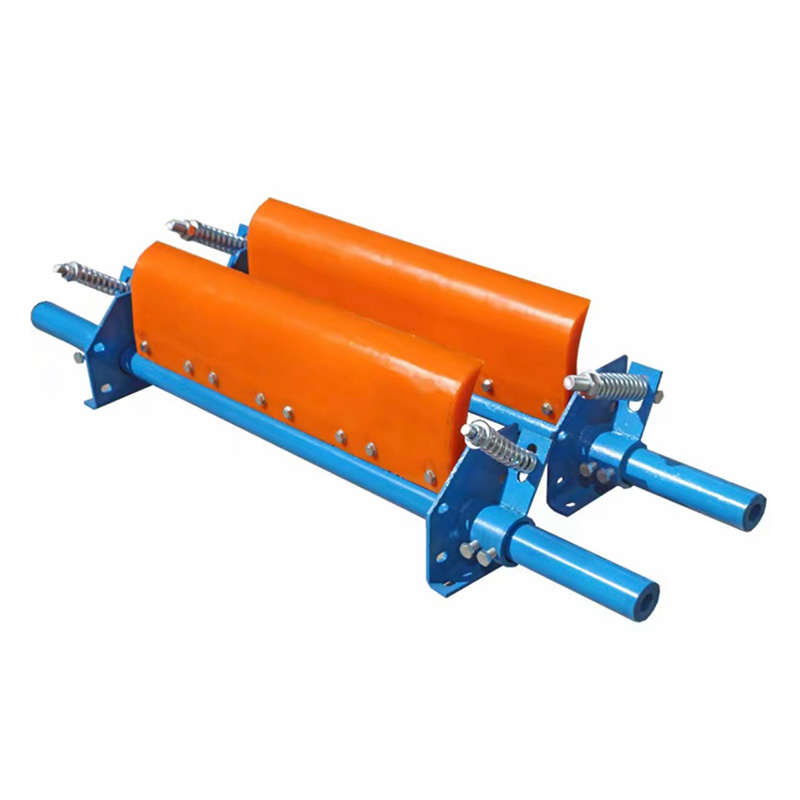
Tungsten carbide provides distinct metallurgical advantages. It is a composite material. Manufacturers create it by cementing hard tungsten carbide grains with a softer cobalt binder. This metallurgical process produces an incredibly durable scraping edge that outlasts elastomers by a massive margin.
The material delivers extreme hardness and abrasion resistance. It maintains a sharp scraping edge over a long lifecycle. This durability ensures consistent cleaning performance. The resulting blade resists extreme abrasive wear. It maintains a sharp profile exponentially longer than any elastomer.
This rigidity provides unmatched cleaning efficiency. However, it completely eliminates flexibility. The blade cannot absorb heavy impacts. If a large rock wedges between the blade and the belt, the carbide tip can chip or fracture. You must ensure the primary cleaner removes all large debris before the belt reaches the carbide blade.
A carbide blade belt cleaner excels in secondary or tertiary positions. Technicians position it flat against the belt. It effectively removes fine, sticky, or embedded particles. These stubborn fines typically bypass the primary cleaner.
The rigid edge acts like a razor. It squeegees the belt surface completely clean. This high-pressure seal prevents dust generation along the return run. We frequently install these systems on conveyors handling wet sand or fine cement powder, where even a millimeter of carryback causes massive housekeeping issues.
You must follow one strict operational rule. Carbide blades require seamlessly vulcanized belts. Never use them on mechanically spliced belts. A rigid carbide blade will catch metal fasteners. This collision acts like a chisel hitting a bolt.
It causes catastrophic belt tearing. It rips the splice completely apart. It damages the conveyor structure. It also creates severe safety hazards for nearby personnel. If your belt has mechanical fasteners, you cannot use a standard carbide blade. You must rely entirely on polyurethane systems.
Carbide handles extreme conditions effortlessly. It performs exceptionally well on high-speed belts. Friction-induced heat does not affect the metal. High-temperature applications pose no threat. Hot clinker, foundry sand, and slag require carbide solutions.
Polyurethane would melt or wear out prematurely in these environments. Highly abrasive materials like iron ore and crushed quartz require the extreme hardness of tungsten carbide to maintain a scraping edge. When belt speeds exceed 1000 feet per minute, carbide becomes the only viable option for secondary cleaning.
Reversing belts present a unique challenge. Standard rigid carbide blades can catch and snap. The belt direction change creates opposing friction. The blade digs into the belt cover when the belt runs backward.
You must use specifically engineered trailing-arm designs. Dual-directional mounts prevent blade damage on reversing systems. These specialized tensioners allow the blade to flip or relieve pressure when the belt reverses direction. Without these tensioners, the reversing belt will destroy the carbide assembly within the first few hours of operation.
Application environments dictate material selection. You must analyze your specific operational parameters before making a choice. Guessing leads to excessive downtime and ruined conveyor belts.
Wet, sticky clay requires flexible scraping. Polyurethane sheds sticky materials easily. The flexing action of the elastomer helps break the suction of wet mud. Dry, abrasive silica sand demands rigid hardness. Carbide resists the sandpaper effect of dry abrasives.
Chemical exposures also influence the decision. Corrosive environments might require specialized polyurethane or stainless-steel carbide assemblies. If you convey materials treated with dust suppression chemicals, verify that the chemicals will not degrade the polyurethane binder.
Belt condition plays a massive role in blade selection. Older, damaged belts feature irregular profiles. Cupped belts have a concave shape. Rigid carbide leaves gaps on a cupped belt. It cannot bend to touch the center of the belt.
Polyurethane conforms easily to these irregular surfaces. It flexes to seal the gaps. Carbide requires a relatively flat, undamaged belt cover. Rigid blades cannot follow deep grooves effectively. If your belt cover is heavily scored or gouged, a carbide blade will simply ride over the top of the grooves, leaving lines of carryback along the entire return run.
Maintenance and tensioning differ significantly between the two materials. Polyurethane systems often use spring tensioners. Carbide systems frequently utilize air tensioners or heavy-duty spring shocks.
Polyurethane requires more frequent tension adjustments. The blade wears down faster, altering the contact angle.
Carbide maintains a consistent profile much longer. It requires minimal tensioning adjustments over its lifespan.
Polyurethane blades weigh less. Maintenance crews handle them easily. You can cut them to size on-site with a utility knife.
Carbide assemblies weigh considerably more. They require precise handling, specialized installation tools, and multiple technicians for safe lifting.
Evaluate the operational downtime required for replacements. Polyurethane involves higher replacement frequencies. You will swap out multiple polyurethane blades over a given period. This requires shutting down the belt, locking out the system, and deploying maintenance personnel.
Carbide offsets its heavy installation requirements through long-term durability. Highly abrasive applications maximize carbide's lifespan advantage. You spend less time shutting down the belt for blade replacements. In a 24/7 mining operation, reducing maintenance shutdowns directly increases plant output.
Feature | Polyurethane | Tungsten Carbide |
|---|---|---|
Splice Compatibility | Mechanical & Vulcanized | Vulcanized ONLY |
Conveyor Position | Primary (Head Pulley) | Secondary / Tertiary |
Belt Condition | Forgiving on worn/cupped belts | Requires flat, undamaged belts |
Speed Limits | Moderate (Prone to melting >1000 fpm) | Excellent for high speeds |
Maintenance | Frequent tensioning adjustments | Minimal adjustments needed |
Impact Resistance | High (Absorbs heavy shocks) | Low (Prone to chipping on impact) |
Installing a belt cleaner incorrectly negates all material advantages. You must follow strict engineering guidelines to protect your conveyor system. A poorly installed cleaner acts as a brake on your conveyor motor and destroys your belt cover.
Improper tensioning creates severe operational risks. Over-tensioning applies excessive mechanical pressure. This forces the blade to dig into the rubber cover. The resulting friction generates extreme heat. This heat causes thermal degradation of the belt cover. It also triggers violent blade chatter. The vibration travels through the mounting pole. It can eventually fracture the tensioner bracket or snap the mounting pole entirely.
Under-tensioning creates entirely different problems. A loose blade allows fugitive material to pass underneath. This material wedges between the blade and the belt. It accelerates wear on the back of the blade. The buildup eventually hardens. It forces the blade completely off the belt surface, rendering the cleaner useless. You must use a torque wrench or measure the tensioner spring length exactly to the manufacturer's specifications.
Mounting requires strict engineering tolerances. Installing a carbide system demands exact angles. The mounting pole must be perfectly horizontal. Strict alignment prevents belt damage. If a carbide blade sits at an angle, one corner will gouge the belt cover.
Polyurethane installations offer slightly more forgiving tolerances. The elastomer flexes to accommodate minor misalignments. However, precision still maximizes cleaning efficiency for both materials. Use a magnetic angle finder during installation to verify the blade sits at the exact angle specified in the engineering drawings.
Establish routine inspection protocols. Create a realistic maintenance schedule based on your operating hours. Do not wait for carryback to pile up on the floor before checking your blades.
Implement strict lockout/tagout procedures before inspecting any cleaner assembly.
Inspect blade wear lines weekly. Replace polyurethane blades once they reach the molded wear indicator.
Check tensioner springs for proper compression. Measure the spring length against the manufacturer's manual.
Clear material buildup from the cleaner mainframe regularly. Hardened material restricts blade movement.
Inspect carbide tips for chipping or uneven wear patterns. Replace damaged tips immediately to prevent belt gouging.
Verify the mounting pole remains perfectly horizontal and has not shifted due to vibration.
Take these immediate next steps to optimize your conveyor scraping system and eliminate carryback:
Conduct a comprehensive conveyor audit to map out all bulk material transfer points and carryback zones.
Verify your exact belt splice types before ordering any new scraping equipment.
Measure your current conveyor belt speed to ensure it falls within the blade material's safe operating limits.
Consult with a bulk material handling engineer to design a custom multi-stage cleaning system.
A: No. Using a rigid carbide blade on a mechanically spliced belt creates severe risks. The hard metal edge will catch the mechanical fasteners. This collision can rip the splice apart, tear the belt, and destroy the cleaner assembly. You must use flexible polyurethane blades for mechanically spliced belts.
A: Lifespan varies wildly based on application specifics. A blade might last three months in highly abrasive environments like crushed rock. In lighter applications handling soft materials, it can last over a year. Operational hours, material abrasiveness, and proper tensioning dictate the exact replacement timeline.
A: A primary cleaner sits at the head pulley. It uses a peeling angle to remove heavy, bulk material before it leaves the discharge zone. A secondary cleaner sits underneath the conveyor line. It presses flat against the belt to scrape away fine, sticky, or embedded particles.
A: Blade chatter usually stems from incorrect installation or maintenance. Common root causes include an improper angle of attack or severe over-tensioning. Friction-induced heat can also cause bouncing. Using a rigid blade on a heavily cupped or irregular belt surface frequently triggers this damaging vibration.
A: Monitor the visual wear indicators. Most polyurethane blades feature a molded wear line. Once the material erodes down to this line, replace it immediately. A sudden drop in cleaning efficiency or an increase in carryback also signals that the blade has reached the end of its usable life.
A: Yes, this represents an industry best practice. Engineers recommend installing a polyurethane blade in the primary position to handle bulk removal. You then install a carbide blade in the secondary position for precision cleaning. This multi-stage setup requires a seamlessly vulcanized belt to operate safely.


